Two costs with different causes
A swap can produce disappointing output for more than one reason. Uniswap’s documentation distinguishes price impact, the price change caused by the trade itself, from slippage between the expected and executed outcome. Understanding the difference matters because an interface setting cannot repair every cause of a poor trade.
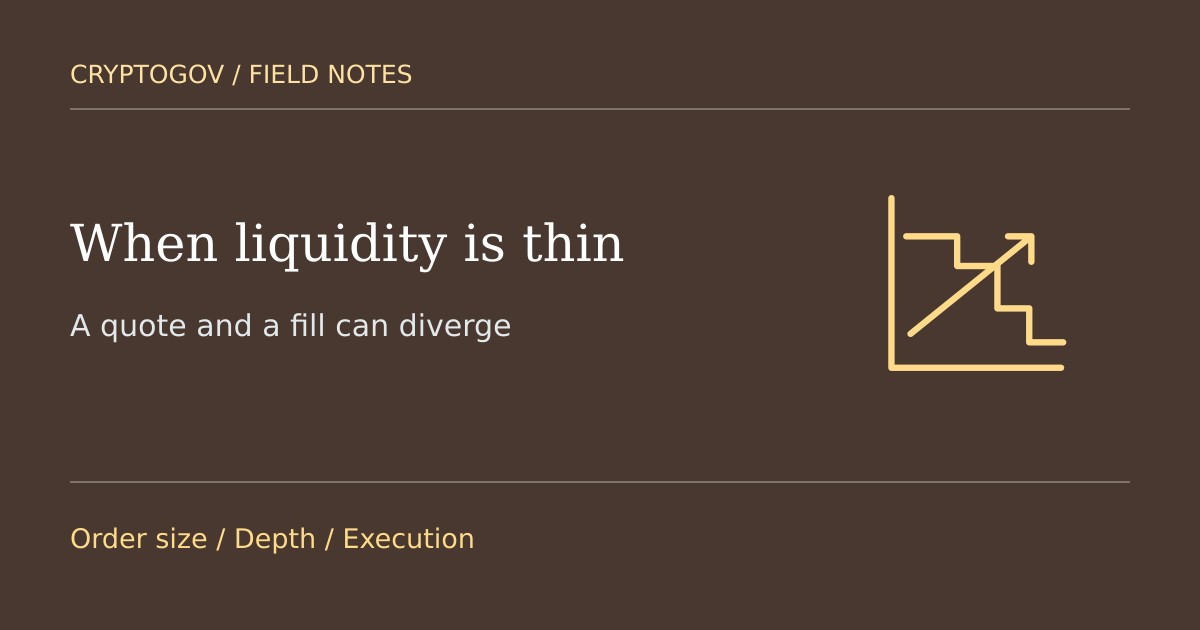
Liquidity depth affects the impact of an order. When a trade is large relative to the available liquidity, its execution can move through increasingly unfavourable prices. This is a market-structure explainer reviewed on 31 October 2026, not a live liquidity assessment of any token or a prediction about the next market move.
A hypothetical comparison
Suppose two interfaces show the same indicative token price, but one route offers materially less output for the amount you enter. Before concluding that the display is wrong, compare the executable quotes and the size of the intended trade. The relevant number is what that specific order can receive, after identified costs, rather than what a tiny transaction might imply.
Increasing a tolerance setting allows more room for execution to differ from the quote under the applicable trade conditions. It does not add assets to the pool. In this hypothetical example, using a looser setting to overcome a warning could accept an outcome the trader had not actually evaluated. A completed swap is not automatically a well-priced swap.
Make the comparison reproducible
CryptoGov’s proposed execution note records the input amount, quoted output, minimum acceptable output, route and time of observation. Record displayed fees separately where the interface provides them. This is a way to clarify a decision, not a claim that every route exposes identical information or that one method guarantees best execution.
If you compare different order sizes, treat each quote as a new observation. Conditions can change between checks, and a theoretical plan to divide an order does not guarantee a better combined result. The comparison should also include the additional costs and practical limitations of the proposed approach.
The conclusion is to identify the source of the difference before changing a setting. A price-impact problem asks whether the intended order is sensible for the available market. A slippage problem asks what execution variation the trader is willing to accept. Blending those questions makes it easier to consent to an expensive result while believing that only a technical obstacle has been removed. Clear terminology protects the quality of the decision, even when the decision is to wait.
Go deeper on CryptoGov
Sources & verification
Researched and published by CryptoGov Editorial Desk. Source publication and effective dates are explained in the article where relevant.