Two routes out of a position
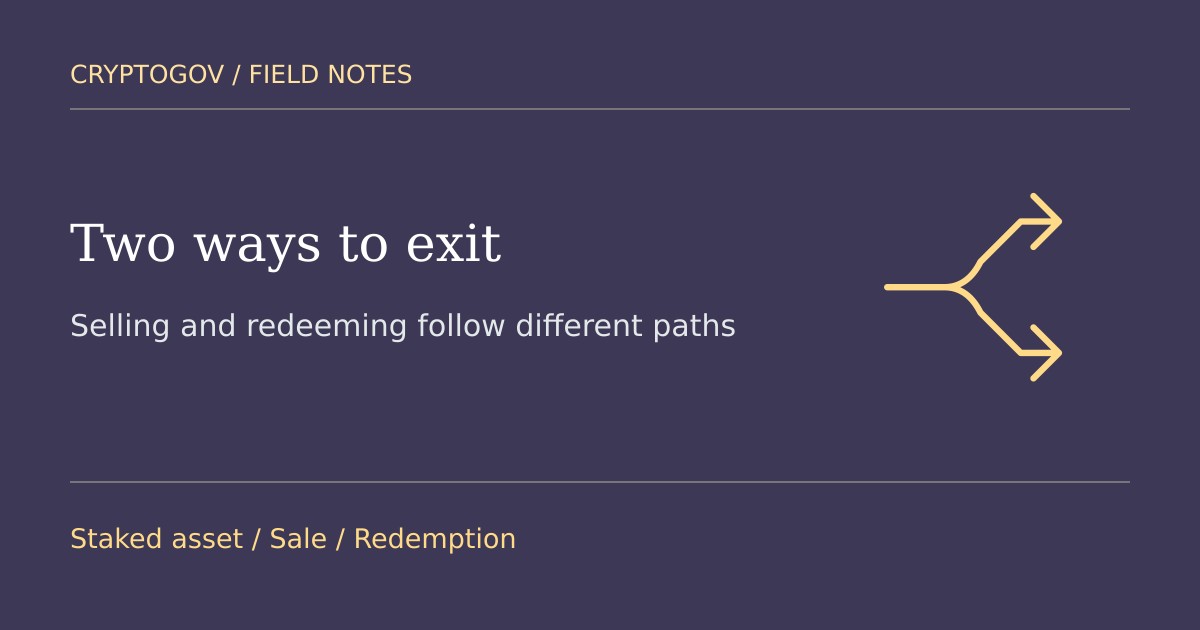
Ethereum’s liquid-staking documentation describes two distinct exit routes: redemption through the protocol and sale of the token on a secondary market. Redemption can depend on available liquidity and validator exits. A market sale depends on the executable price. Neither route should be described simply as instant access without examining its conditions.
Ethereum’s withdrawal documentation separately explains the movement of funds from validator accounts to the execution layer. These are different layers of the process. This article is an educational analysis reviewed on 31 October 2026, not a report of current queue lengths, discounts or available liquidity.
Match the route to the obligation
A hypothetical holder may be comfortable waiting for a protocol redemption when no cash obligation is due. The same holder facing a near-term payment may care more about immediately executable proceeds. That difference does not establish which route is universally better; it shows why the intended use of the funds belongs in the decision.
CryptoGov proposes comparing the required asset, required time and acceptable uncertainty before looking at the advertised reward. Someone who needs spendable ETH on a specific date is asking a different question from someone who can retain exposure indefinitely. Treating both as the same investor profile obscures the practical significance of exit conditions.
Read the additional dependencies
A liquid staking token adds a claim through a service or smart-contract arrangement to the underlying staking activity. Ethereum’s guidance identifies contract, governance, operator and market risks among the relevant considerations. The token’s portability should not be interpreted as removing the need to understand that arrangement.
For a useful review, write down which exit route you expect to use and why. Then describe an alternative if the preferred route is slower or more costly than anticipated. This is planning guidance, not a prediction that a given provider will suspend service or that a token will trade at a discount.
The conclusion is to separate liquidity in appearance from liquidity for a particular obligation. A tradable token gives an additional route, but the economics of that route still matter. An expected reward can be overwhelmed by an exit decision made under pressure. Evaluating time requirements at entry makes that trade-off explicit and prevents a common category error: equating the ability to submit a transaction with certainty about its timing and financial result. No reward or exit outcome is guaranteed by this analysis.
Go deeper on CryptoGov
Sources & verification
Researched and published by CryptoGov Editorial Desk. Source publication and effective dates are explained in the article where relevant.