A bookmark can outlive the code it points to
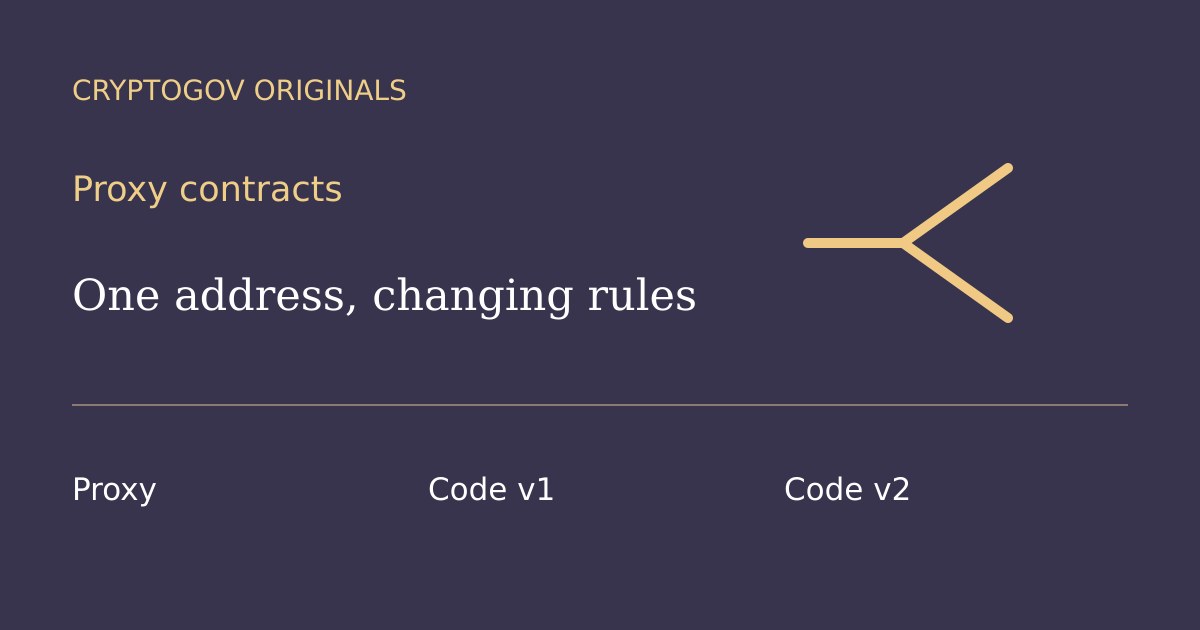
A team announces a change to its token while telling holders that the familiar address will continue to work. That combination is possible when a proxy delegates execution to a separate implementation. To understand the claim, the reviewer needs two identifiers: the address users interact with and the implementation used at the point in time being reviewed. ERC-1967 describes standard storage locations for information used by common proxy designs. It gives an investigator a practical starting point. A blank value in one location is not enough to classify an unfamiliar design, however. Read the deployed architecture and establish whether it uses a direct implementation, a beacon or some other mechanism.
Compare the authority as well as the code
Imagine that the earlier implementation imposed a limit on issuance and the new implementation exposes a different minting path. A ticker, token balance and bookmarked address could look unchanged through the transition. Write two columns in the file. In the first, identify what operations the current code permits and which roles can call them. In the second, identify who can replace the implementation or change the route used to find it. The same address need not hold both powers. A role described in a governance blog post also requires a link to the actual mechanism that grants or revokes it. Otherwise readers cannot tell whether the document describes a commitment, a capability or a future plan.
Build a comparison that survives the next upgrade
Choose a block before the reported change and another after it. Preserve the network, proxy address, implementation or beacon readings, verified code references and transaction that connects the two observations when available. For a beacon, also trace which implementation the beacon returned. Distinguish evidence of a code change from evidence that a new function has actually been used. One describes capability, the other an observed action. An honest finding can be narrower than the announcement: the implementation changed between the two snapshots, while the economic impact remains unresolved. That finding gives readers something concrete to monitor and gives future reviewers a baseline more durable than a screenshot of a token dashboard.
If historical state is unavailable through the selected explorer, mark the earlier implementation as unresolved. A current reading cannot establish yesterday’s configuration. A dated event can guide the investigation, but its meaning still depends on the contract that emitted it.
Go deeper on CryptoGov
Sources & verification
Researched and published by CryptoGov Editorial Desk. Source publication and effective dates are explained in the article where relevant.